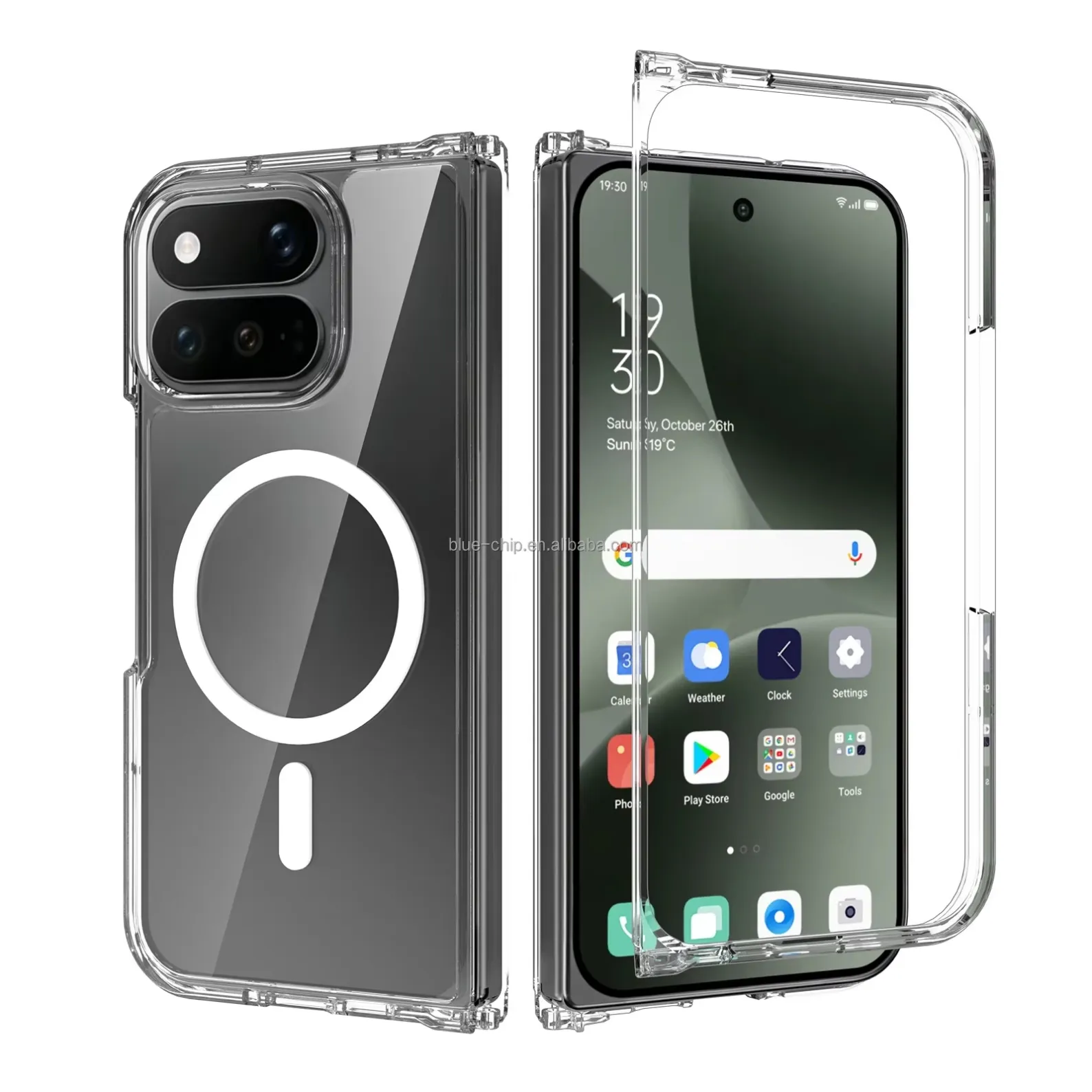
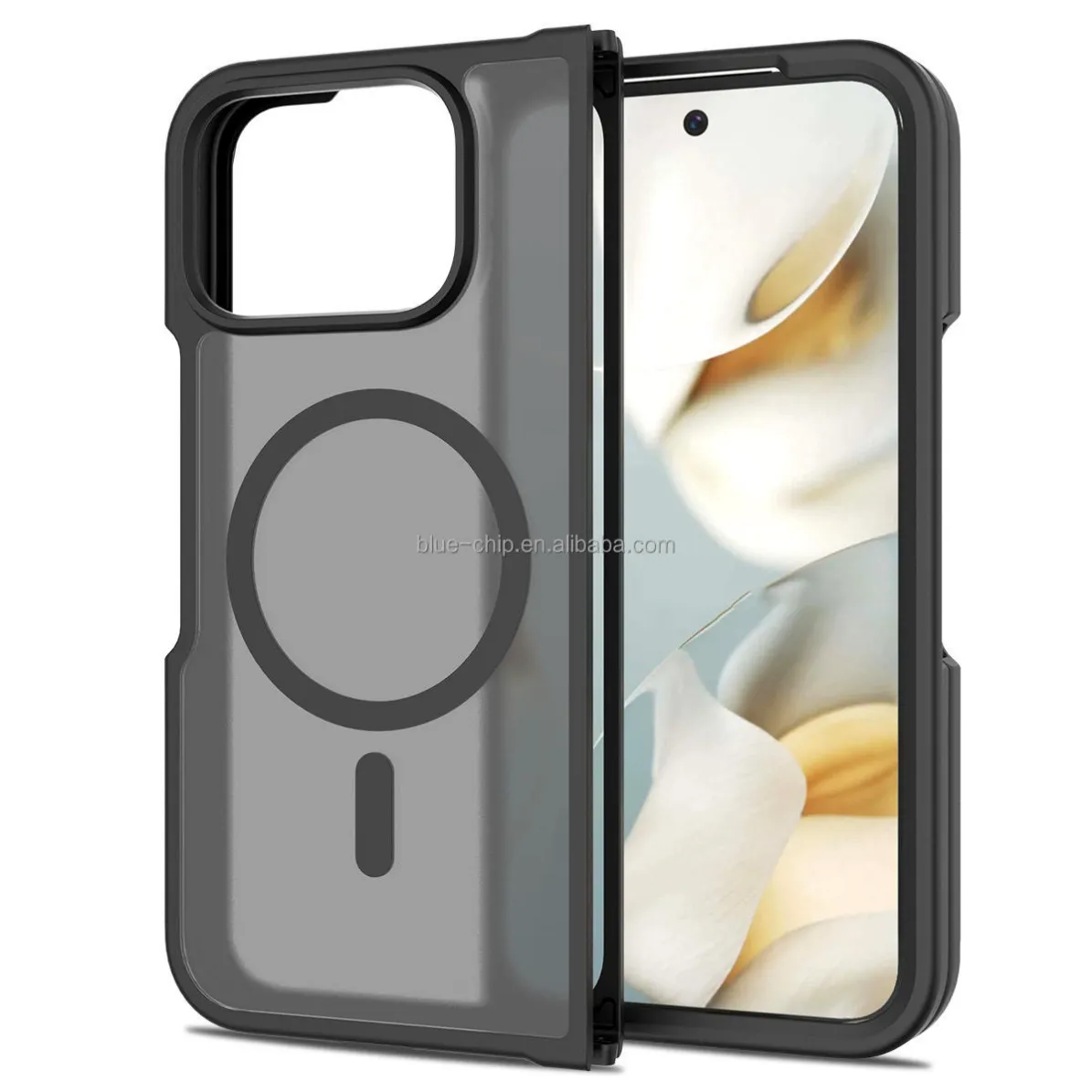
Foldable Cases
How Foldable Phone Cases Are Made: Hinge Protection Explained
A factory walkthrough of how foldable phone cases are designed and moulded: hinge geometry, two-panel construction, TPU and PC material choices, and what buyers should check before a bulk order.
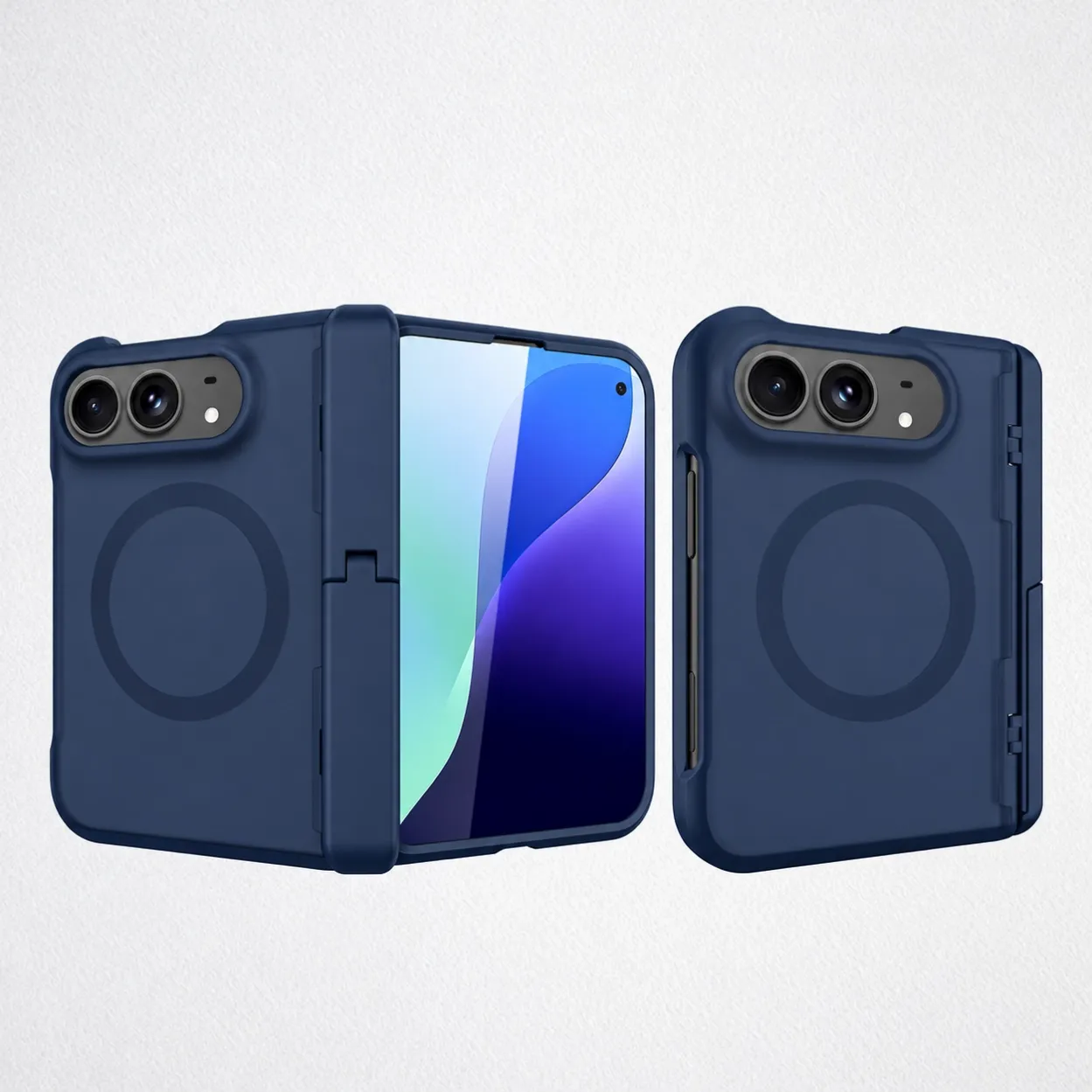
The hinge is the whole problem
A bar-phone case protects one flat slab. A foldable case has to protect two screens and a moving joint at the same time, stay thin enough that the phone still closes flat, and never block the fold. That is why a foldable case cannot be a stretched version of a normal case. If a supplier sends you a catalogue page and the only difference between the foldable model and the bar-phone model is the drawing, that is a warning sign.
Step 1: mould design around the hinge
We start from the phone's folded and unfolded dimensions, then map the hinge travel. The two panels are drawn separately so each half can follow its own side of the fold. Corner radius and the camera bar cut-out are fixed at this stage, because changing them after the mould is cut means cutting a new mould. This is the step that decides whether the finished case creaks in month two.
Step 2: CNC mould making
The mould is cut in our own shop. Running our own mould shop is what lets us turn a new foldable model around in about 60-90 days instead of months, and it is why we can quote hard-to-find carrier models that larger suppliers skip entirely. When a buyer asks how long a new model takes, the honest answer depends almost entirely on who is cutting the steel.
Step 3: injection moulding and materials
PC gives a rigid back that resists scratches and twisting. TPU gives a flexible frame that absorbs drop energy. A hybrid uses both: the rigid PC panel holds the shape while the TPU bumper takes the impact. Liquid silicone is the third option, chosen for a softer feel and a matte grip rather than for maximum rigidity. A clear case is the hardest of the four, because any flash or uneven wall thickness shows up as a milky patch, so the mould has to be polished and the cycle controlled.
Step 4: surface finishing, assembly and packing
After moulding comes spray painting or printing, then assembly of magnets, kickstands or ring holders, then packing. Every case is checked before it ships. Our MOQ is 100pcs per order with 20pcs per model per color, bulk production runs about 15-20 days after payment, and we ship by DHL, UPS, FedEx, air freight or ocean freight.
What to check before a bulk order
Order a sample first. Open and close the phone at least fifty times with the case on and listen for creaking or pinching. Check that both halves stay seated, that the magnet ring holds a charger through the case, and that the raised bezel actually clears the table when the phone is face down. A sample that survives fifty cycles on a desk is a better predictor of returns than any spec sheet.